 385-777-2753

- Home
- Firm Overview
- Our Team
- Attorney Joseph Rupp
- Attorney Logan Collins
- Attorney Yvette Donosso
- Attorney Rakay Michael
- Attorney Brody O’Connor
- Paralegal Julie Johnston
- Paralegal Sisilee Musselman
- Paralegal Tuesday Collins
- Legal Assistant Mackelle Evans
- Administrative Assistant Braelyn Henrikson
- Executive Assistant Teresa Welty
- Criminal Defense
- Family Law
- Scholarship
- Media
- Blog
- Contact
Fighting a Drug Paraphernalia Possession Charge in Utah
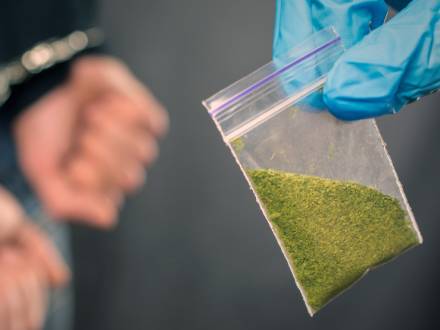
A drug paraphernalia charge in Utah can result from items police believe are connected to drug use. However, whether an object legally qualifies as paraphernalia depends on the facts surrounding its possession and use.
If you are facing a paraphernalia charge in 2026, Salt Lake City drug crimes defense lawyers can review the evidence and explain what you can do to fight the allegations.
What Counts as Drug Paraphernalia in Utah?
Under Utah Code § 76-18-304, it is illegal to use drug paraphernalia or possess it with plans to use it for illegal drug activity. This includes taking drugs or producing, processing, storing, hiding, or preparing them. The object has to qualify as paraphernalia, and you have to have intended to use it with controlled substances.
Most items charged as paraphernalia have perfectly legal uses. A digital scale, a glass pipe, aluminum foil, a straw, a spoon, small plastic bags, and rolling papers are all sold openly. None becomes illegal on its own. The State therefore has to prove intent. An officer’s conclusion that something looked like paraphernalia can be challenged using the facts of the case.
How Do Utah Courts Decide if an Item Is Drug Paraphernalia?
The Drug Paraphernalia Act lists factors a court must consider when deciding these cases:
-
Statements by the owner or whoever controlled the object about how it was used
-
Prior convictions of the owner under drug laws
-
How close the object was, in time and place, to a drug violation
-
Whether it was found near a controlled substance
-
Drug residue on the object
-
Instructions or descriptive materials accompanying it
-
How the item was advertised or displayed for sale
-
Whether legitimate uses for the object exist in the community
-
Expert testimony about the object's use
When an item has obvious legitimate uses and no residue, no admissions, and no drugs nearby, the State is left arguing from appearance alone. Residue testing deserves particular attention. Officers frequently describe a visible residue in a report without any lab confirmation of what it actually was.
What Are the Penalties for Paraphernalia Possession in Utah?
In Utah, possessing or using drug paraphernalia is a Class B misdemeanor. A conviction can lead to up to six months in jail and a fine of up to $1,000. The charge rises if the allegation involves distribution. Delivering paraphernalia, possessing it with intent to deliver, or manufacturing it with intent to deliver is a Class A misdemeanor, carrying up to 364 days in jail and a fine of up to $2,500. An adult who delivers paraphernalia to someone under 18 who is at least three years younger commits a third-degree felony.
Jail time is uncommon for a first paraphernalia charge standing alone. However, the conviction appears on background checks for employment, housing, and professional licensing.
Can an Illegal Search Get a Paraphernalia Charge Dismissed?
Paraphernalia charges typically come out of a search, and the question is whether that search was lawful. Common issues include:
-
A traffic stop extended beyond the time needed to handle the original reason for the stop
-
A vehicle search based on an officer’s claim of cannabis odor when no evidence supports that claim
-
Consent given after repeated requests or after being told a search would happen anyway
-
A vehicle search where nothing in the passenger compartment justified going further
-
An inventory search that did not follow department policy
When a judge excludes the item from evidence, it can seriously weaken the prosecution’s case. The charge could be dismissed if the remaining evidence is not enough to prove it.
What Alternatives Exist to a Drug Paraphernalia Conviction in Utah?
A dismissal is not the only favorable outcome. A plea in abeyance can keep a conviction off your record if you complete conditions such as classes, an evaluation, or staying out of trouble. Diversion may also resolve the case without a conviction, and in some cases without a plea.
Salt Lake County drug court may be another option for cases involving substance use, with treatment and possible dismissal after successful completion. Utah also allows some offenses to be reduced after probation. Depending on your record and the outcome of your case, you could later qualify for expungement, which keeps the record from public view.
Schedule a Free Consultation With Our Davis County, UT Drug Crimes Defense Attorneys
The criminal defense team at Collins Rupp, P.C. includes Joseph Rupp, a retired United States Marine Corps officer. A paraphernalia charge is often someone's first contact with the criminal system. It tends to arrive alongside worries about a job, a license, or school rather than about jail.
Contact Collins Rupp, P.C. at 385-777-2753 to talk to our Salt Lake City drug crimes defense lawyers today. We offer phone and video consultations.






Office Hours
Monday - Thursday
9:00 AM - 5:00 PM
Friday
9:00 AM - 3:00 PM
Results listed are not a guarantee or indication of future case results.
563 West 500 South, Suite 400, Bountiful, UT 84010 |
385-777-2753

Contact Our Firm
 The use of the Internet or this form for communication with the firm or any individual member of the firm does not establish an attorney-client relationship. Confidential or time-sensitive information should not be sent through this form.
I have read and understand the Disclaimer and Privacy Policy.