
 385-777-2753

What Will Happen to My DUI Case if I Refused a Breathalyzer?
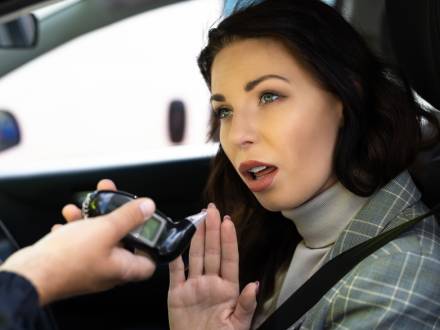
Refusing a breath test in Utah does not end a DUI case. Police can use other evidence of impairment, and prosecutors can mention the refusal in court. You also risk license revocation, even without a conviction. Police can ask a judge for a warrant to draw your blood. If a judge issues the warrant and police give you the required warning, refusing the blood test can lead to a separate charge. If you’ve been charged in 2026, our Salt Lake City DUI defense lawyers can address both proceedings.
What Happens Under Utah's Implied Consent Law if You Refuse Testing?
Under Utah Code § 41-6a-520, driving in Utah means you agree to testing if police have reason to suspect a DUI. These can include breath, blood, urine, or oral-fluid tests. Officers decide which tests to request. Refusing one can count as refusal even if you agree to another. If you refuse a chemical test requested after your arrest, police must warn you about the penalties for refusing.
Utah's Driver License Division (DLD) handles license revocations for refusing a chemical test separately from the criminal DUI case. This means you can lose your driving privileges even if the DUI charge is dismissed or you are found not guilty.
How Long Will Utah Revoke Your License for Refusing a Breath Test?
Under Utah Code § 41-6a-521, a driver age 21 or older ordinarily faces an 18-month revocation for a first refusal. A qualifying prior DUI-related offense within ten years can increase it to 36 months. Younger drivers face different penalties. For adults, a first refusal is much longer than the usual 120-day license suspension following a first DUI arrest without refusal.
You have ten calendar days after receiving the officer's notice to request a DLD hearing in writing. For arrests on or after July 1, 2026, your license revocation starts on the 60th day after arrest if you do not request a hearing on time. For earlier arrests, it started on the 45th day. A hearing offers a chance to challenge revocation, not a guaranteed result.
Can You Be Convicted of DUI in Utah Without a Breath Test?
Utah's DUI law allows conviction when a driver has a blood or breath alcohol level of 0.05 or higher, or when alcohol or drugs make the driver unable to operate safely. Impairment does not require a test result.
Prosecutors can rely on driving behavior, speech, coordination, witness statements, and roadside sobriety tests. Utah also permits evidence of a refusal to be introduced in a DUI case. Refusal alone does not prove guilt. Prosecutors must still prove every element of DUI beyond a reasonable doubt. Video and witness accounts can contradict an officer's description of impairment.
Can Police Get a Blood Test After You Refuse a Breathalyzer?
Police can ask a judge for a warrant authorizing a blood draw. If issued, the warrant can permit testing despite your objection. However, the warrant and blood draw can be challenged.
Utah also has a separate criminal refusal offense. It requires a warning, a warrant, and refusal of the blood draw. Merely declining an initial breath test does not by itself establish that separate offense. The refusal charge can be filed alongside DUI.
How Can a Lawyer Challenge a Utah DUI Breathalyzer Refusal Case?
The DLD hearing and criminal case are separate. A defense attorney can review:
-
Whether police had a legal reason for the stop and testing request
-
Whether officers gave the required refusal warning
-
Whether the driver actually refused or could not complete the test
-
Whether video matches the officer's description
-
Whether any blood-test warrant was valid and properly carried out
In Utah, drivers cannot delay a chemical test to speak with a lawyer first. However, an attorney can challenge the accuracy of roadside sobriety tests and whether officers performed them correctly.
What Penalties Can Follow a Utah DUI or Criminal Refusal Conviction?
A standard first DUI is a Class B misdemeanor, with up to six months in jail. Sentencing ordinarily includes at least two days in jail or 48 hours of community service, along with fines and substance-use screening. More serious cases have higher minimums.
If you have one DUI or related conviction that counts under Utah law from the past 10 years, a new DUI is usually a Class A misdemeanor. With two such convictions in that time, a new DUI is a third-degree felony. License and ignition-interlock restrictions can apply separately.
For a criminal refusal conviction, any jail sentence must be at least one day longer than the minimum for a comparable DUI. The minimum fine is also $100 higher. A refusal conviction can count as a prior offense if you are convicted of DUI later.
Schedule a Free Consultation With Our Davis County, UT DUI Defense Attorneys
If you refused a breathalyzer in 2026, acting quickly is important because of the short deadline to challenge your license revocation. Attorney Joseph Rupp, a retired United States Marine Corps officer, can review the evidence in your DUI case, examine the testing procedures, and help you address both the criminal charges and the separate license penalties.
Contact Collins Rupp, P.C. at 385-777-2753 to talk to our Salt Lake City DUI defense lawyers today. Phone and video consultations are available.





Office Hours
Monday - Thursday
9:00 AM - 5:00 PM
Friday
9:00 AM - 3:00 PM
Results listed are not a guarantee or indication of future case results.
563 West 500 South, Suite 400, Bountiful, UT 84010 |
385-777-2753

Contact Our Firm
 The use of the Internet or this form for communication with the firm or any individual member of the firm does not establish an attorney-client relationship. Confidential or time-sensitive information should not be sent through this form.
I have read and understand the Disclaimer and Privacy Policy.